Glovio Blog
Why Dialect Matching Matters More Than Translation
You translated your video into Hindi. Views flatlined. Engagement was worse than your English original. The problem wasn't the translation. It was the dialect. Generic translation treats all Hindi speakers the same. It treats all Portuguese speakers the same. Your audience can tell the difference in under 3 seconds.
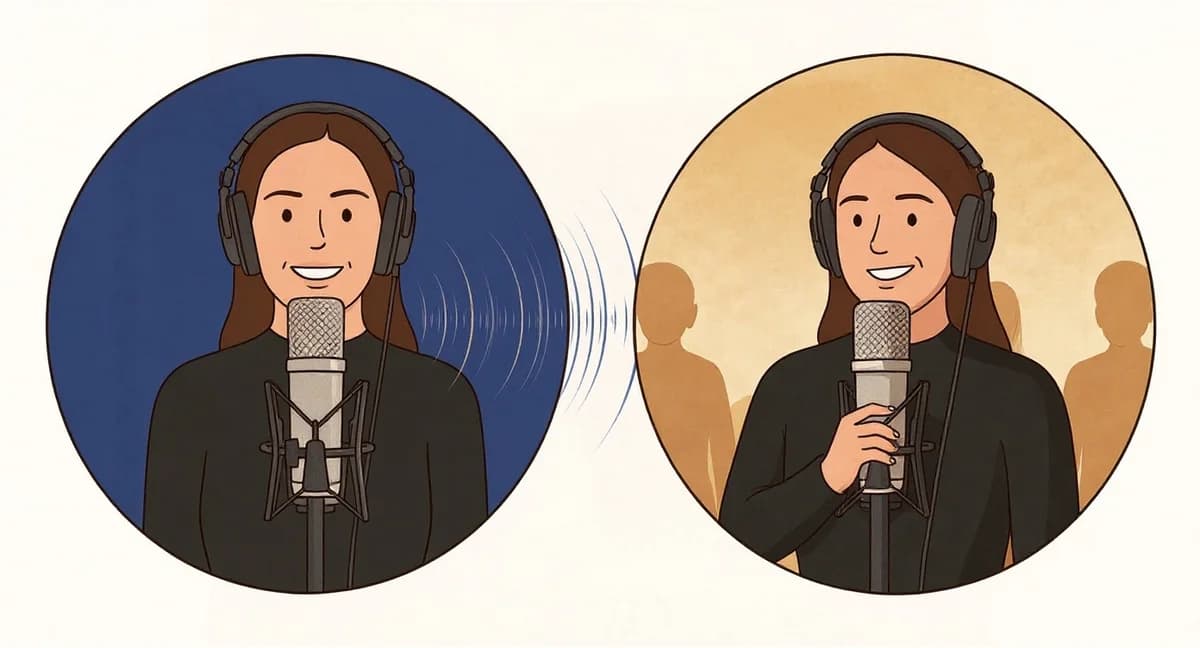
Translation Gets the Words Right. Dialect Gets the Viewer Right.
Translation converts meaning from one language to another. Dialect matching goes further. It adapts tone, slang, pacing, and cultural references for how people actually talk in a specific market.
Think about English. A video scripted for London sounds different from one made for Texas. Both are English. Both would confuse the other audience if the goal was to feel native.
The same gap exists in every major language. And when creators skip dialect matching, the content sounds off. Viewers scroll past it.
Hinglish vs Formal Hindi: Why India's Biggest Audience Rejects Textbook Translation
India has over 600 million internet users. Hindi is one of the most spoken languages on earth. Creators see the numbers and rush to translate.
But most translation tools output formal, textbook Hindi. The kind you read in government documents. Nobody watches YouTube or TikTok in that register.
Young Indian viewers (the ones who watch creator content) speak Hinglish. That's Hindi mixed with English words, phrases, and sentence structures. "Bro, yeh actually kaam karta hai" hits different than a formal Hindi equivalent.
When we localized a creator's content into Hinglish instead of formal Hindi, the separate Hindi channel hit 37,000+ reach in week 8. The content felt like it was made for that audience, not translated at them.
Formal Hindi sounds like a dubbed Bollywood movie from the 90s. Hinglish sounds like a friend explaining something useful.
Brazilian Portuguese vs European Portuguese: Two Markets That Sound Nothing Alike
Brazil has 215 million people. Portugal has 10 million. Both speak Portuguese. But Brazilian Portuguese and European Portuguese sound as different as American English and Scottish English.
Brazilian Portuguese is warmer, more casual, uses different pronouns ("voce" vs "tu"), different verb forms, and completely different slang. A Brazilian viewer watching European Portuguese content feels the same disconnect an American feels watching a broad Scottish accent without subtitles.
Most translation tools default to one flavor of Portuguese. If it defaults to European, you lose Brazil. If it defaults to Brazilian, you lose Portugal (smaller market, but higher CPMs).
We rebuilt a creator's Portuguese channel from zero after a ban. Using Brazilian Portuguese specifically, the channel has since grown to 3.2 million views and 2,600 followers from zero. That's not a translation win. That's a dialect win.
Other Dialects That Make or Break Creator Content
Hindi and Portuguese are the clearest examples. But dialect matching matters across languages:
Spanish: Latin American Spanish and European Spanish differ in pronunciation, vocabulary, and formality. A Mexican viewer notices Castilian Spanish immediately. Within Latin America, Colombian, Argentine, and Mexican Spanish each have distinct feels.
Arabic: Modern Standard Arabic is nobody's casual language. Egyptian Arabic, Gulf Arabic, and Levantine Arabic are what people actually watch content in.
French: Parisian French, Canadian French, and West African French serve different audiences with different cultural contexts.
Chinese: Mandarin itself splits into regional accents and vocabulary. Simplified Chinese targets mainland. Traditional targets Taiwan and Hong Kong.
Every language has layers. Generic translation ignores them all.
How to Pick the Right Dialect for Your Content
Start with your analytics. YouTube Studio shows you which countries your international viewers come from. That tells you which dialect to target.
If 70% of your Hindi traffic comes from India (ages 18 to 34), Hinglish is the answer. If your Portuguese traffic is 90% Brazil, Brazilian Portuguese is the only option.
Three rules for dialect selection:
- Match the largest audience segment first. Don't try to serve everyone with one translation.
- Use voice cloning matched to the local dialect. A voice cloned in European Portuguese cadence won't sound right to Brazilian ears.
- Adapt cultural references, not just words. A metaphor that lands in Mexico might confuse a viewer in Argentina.
At Glovio, we handle this through our Language Launch Brief. Before any production starts, we analyze your audience data and recommend the specific dialect for each language. You don't need to figure this out yourself.
What Happens When You Skip Dialect Matching
The cost is invisible at first. You translate, you publish, you wait. Views trickle in. Engagement stays flat. You assume the market just isn't interested.
But the market was interested. They clicked. They heard 3 seconds of the wrong dialect and left. Your retention graph shows a cliff at the start of the video. The algorithm reads that as bad content and stops showing it.
You spent money translating. You spent time publishing. And you trained the algorithm to bury your localized content. That's the real cost of skipping dialect matching. It's not just low views. It's a signal to the platform that your content doesn't work in that language.
Getting it right the first time matters more than getting it out fast.
FAQ
How do I know which dialect to use for my content?
Check YouTube Studio or TikTok Analytics for where your international viewers are located. The country breakdown tells you which dialect to target. At Glovio, we analyze this for you in the Language Launch Brief before any production starts.
Can I use one translation for multiple countries that speak the same language?
You can, but engagement will suffer in markets where the dialect feels off. We recommend starting with the dialect that matches your largest audience segment. You can add additional dialects later.
Does dialect matching cost more than standard translation?
At Glovio, dialect matching is included in every plan. We don't charge extra for it because generic translation without dialect matching doesn't deliver results.
What's Hinglish exactly?
Hinglish is a blend of Hindi and English commonly spoken by younger audiences in India, especially in urban areas. It mixes Hindi grammar with English vocabulary and phrases. Most popular Indian YouTube and TikTok content uses Hinglish, not formal Hindi.