Glovio Blog
Auto-Translate vs Professional Localization: What Creators Need to Know
YouTube auto-dubs videos in 27 languages. Instagram and TikTok translate captions. These features are free, and they have a place. But the creators who are serious about reaching a global audience know there is a difference between basic accessibility and actually building an international audience. Here is what auto-translate can and cannot do, and what it takes to grow globally for real.
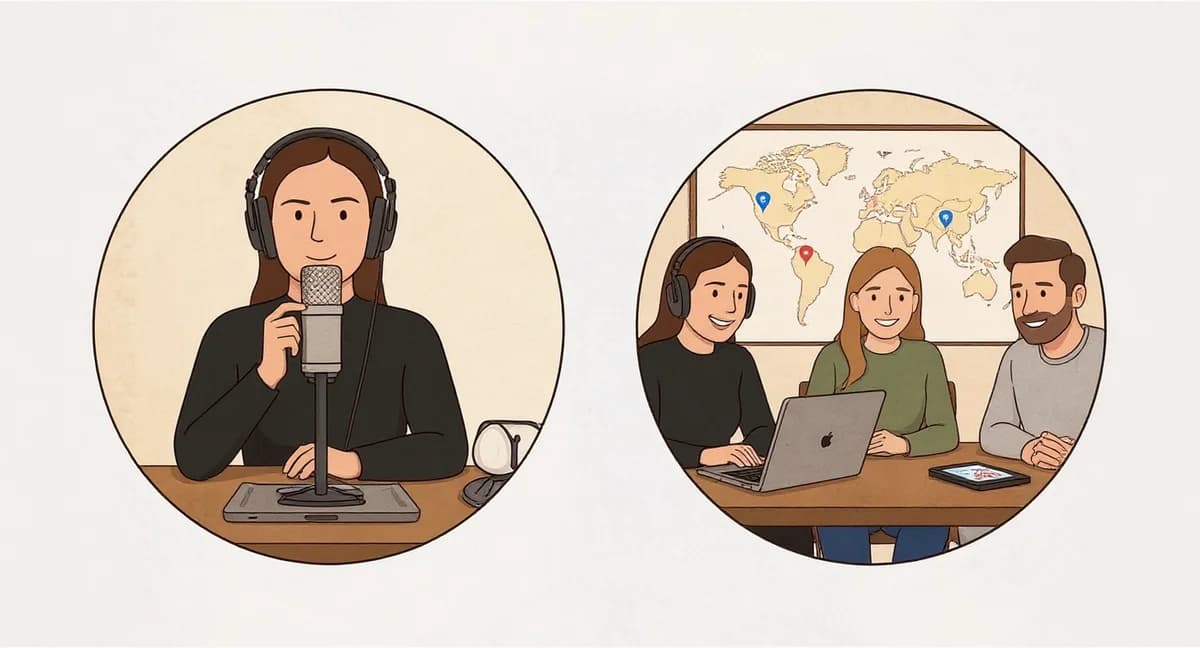
What Auto-Translate Actually Does
YouTube offers auto-dubbing, which generates an AI voice track of your video in up to 27 languages. Instagram and TikTok offer caption translation, which translates the text description beneath your post into other languages. None of these platforms translate on-screen text that's burned into your video, your thumbnails, or your metadata.
These features are free, and they have a place. For basic accessibility, they're better than nothing. If you just want your content to be understandable in other languages without spending a dollar, auto-translate does that.
But there's a difference between making your content accessible and actually growing an international audience. If you're serious about reaching a global audience and turning that into revenue, free features aren't a growth strategy. Here's why.
What Free Auto-Translate Costs You
Auto-translate has no invoice. But it has real costs that show up in your metrics over weeks and months.
CPM dilution. When auto-translate sends your content to viewers in lower CPM markets, your blended CPM drops. A creator averaging 8 dollar CPM in the US might see that fall to 5 or 6 dollars as Hindi and Spanish viewers enter the mix. That difference compounds across every video.
Algorithm confusion. Your channel's recommendation engine is trained on your audience. When auto-translated content pulls in viewers with different behavior patterns, the algorithm gets conflicting signals. It may start recommending your videos less effectively to your core English audience.
Engagement signal damage. Auto-translated content typically gets lower retention, fewer likes, and fewer comments than native-language content. Those weaker signals pull down your channel's overall engagement metrics.
Brand risk. A robotic AI voice speaking formal textbook language doesn't represent your brand. One creator turned on auto-translate and had a brand partner ask why their sponsored content was running on a partially Hindi channel. They turned it off the same day.
Sponsor complications. Brand deals are priced based on audience demographics. When auto-translate changes your audience composition, it changes your value to sponsors. And explaining that shift to a brand partner mid-deal is a conversation nobody wants to have.
None of these costs appear in a dashboard labeled "auto-translate damage." They show up as slowly declining metrics that are hard to diagnose.
Auto-Translate vs Full-Stack Localization
| Category | Platform Auto-Translate | Glovio (Full-Stack Localization) |
|---|---|---|
| Price | Free | 100 dollars per language per month (promo) |
| Voice quality | Generic AI voice, no personality | Your cloned voice in each language |
| Lip sync | None | Included |
| Dialect matching | Formal textbook language only | Market-specific (Hinglish, Brazilian Portuguese) |
| On-screen text | Stays in English | Translated and redesigned |
| Thumbnails | Not touched | Culturally adapted per market |
| Hook adaptation | Word-for-word translation | Culturally rewritten for the market |
| Channel strategy | Published on your main channel | Dedicated channel per language |
| Main channel impact | Dilutes CPM, confuses algorithm | Never touched, fully protected |
| Platforms | Only the platform you're on | YouTube, Instagram, TikTok, Facebook |
| Publishing | Automatic on main channel | Fully managed across all platforms |
| Metadata optimization | None | Titles, descriptions, and tags localized |
| Delivery guarantee | No SLA | 48 hours or the month is free |
The Three Mistakes Creators Make Going Global
After localizing over 1,000 videos, we see the same three mistakes every time.
Mistake 1: Publishing translated content on the main channel. Auto-translate drops foreign language content into your main feed. This blurs engagement clarity, hurts sponsor fit, and pressures blended CPM. The algorithm gets confused about who the audience is. One language per channel, always. This is non-negotiable after seeing the results across 1,000 plus videos.
Mistake 2: Using generic language instead of market-specific dialect. Formal Hindi underperforms Hinglish with India's youth audience. European Portuguese underperforms Brazilian Portuguese in Brazil. Language match alone is not enough. Dialect and cultural fit drive watch time quality. Auto-translate cannot do this.
Mistake 3: Translating only one content layer. Audio only, subtitles only, or auto-dub only consistently underperform. The viewer experiences the full video. Voice, captions, on-screen text, hooks, and cultural context all need to be adapted. Anything less creates a disjointed experience that kills retention.
What Actually Grows International Audiences
The creators who build real international revenue do four things.
They use separate channels for each language. A dedicated Hindi channel, a dedicated Portuguese channel. Each builds its own algorithm, its own audience, its own CPM. The main English channel stays clean and protected.
They localize the full viewer experience. Not just audio. Captions, on-screen text, thumbnail text, hooks, and descriptions. Every layer the viewer touches gets adapted. A viewer in Brazil should feel like the channel was made for them.
They match the local dialect. Hinglish for India. Brazilian Portuguese for Brazil. The difference between reach and resonance is dialect matching.
They start with what already works. Top 10 to 15 evergreen performers, not the entire catalog. Your analytics already tell you which content resonates. Localize what's proven.
This is what full-stack localization means. It is the opposite of auto-translate's "flip a switch" approach.
The Proof
One creator's localized Instagram channels rebuilt from scratch have grown to 3.2 million views and 2,600 followers from zero. Zero paid promotion. Zero prior algorithm history. All organic.
The Hindi channel for the same creator hit 37,000 plus reach in 8 weeks. All organic, all from existing content localized properly.
Across the creator's localized channels: 3.2 million views, 2,600 followers from zero, 99% non-follower reach. None of this touched the creator's main channel.
Auto-translate cannot produce these results because it cannot do what made them possible: separate channels, dialect matching, full-stack localization, and culturally adapted hooks.
When Auto-Translate Is Enough
Auto-translate is free, and free has real value. It makes sense when you want basic accessibility without spending anything. Screen recordings, tutorials with minimal talking head footage, and content where the information matters more than the delivery all work fine with auto-translate.
It also works as a starting signal. If you turn on auto-translate and see international views tick up, that's data. It tells you there's demand in that market worth investing in properly.
But if you're serious about building an international audience, if you're a creator making 10,000 dollars or more per month, if your voice and personality are your brand, if you sell courses or run brand deals, then at some point you need to invest in doing it right. Auto-translate gets you basic reach. Full-stack localization builds you an audience.
What to Do Next
Check your analytics. If more than 15 to 20% of your watch time comes from non-English countries, you have proven demand for localized content.
Take our free assessment. It analyzes your content, audience, and revenue to recommend the right language, the right market, and whether localization makes financial sense for your specific situation. It takes 2 minutes.
If the numbers work, the Pilot Month is free. We set up everything: language channels, publishing, the full localization operation. You see the results before paying a dollar.
FAQ
Should I turn off auto-translate on my channel?
Not necessarily. For languages you aren't actively pursuing, auto-translate gives basic accessibility. But for your priority growth markets, a separate channel with full-stack localization will outperform auto-translated content on your main feed.
How much does professional localization cost compared to free auto-translate?
Managed localization starts at 100 dollars per language per month for full-stack service including dubbing, lip sync, thumbnails, and publishing across 4 platforms. The real question is whether the CPM dilution and algorithm confusion from auto-translate costs you more than that.
Will separate language channels split my audience?
No. Separate channels grow a new audience in parallel. Your main channel keeps its existing audience, engagement, and CPM. After localizing 1,000 plus videos, separate channels consistently outperform mixed-language publishing on a single channel.
How fast can a new language channel grow?
It depends on your niche and the target market. One creator's localized channels have grown from zero to 3.2 million views and 2,600 followers with zero paid promotion. Results vary, but quality localized content in the right market can gain traction quickly.
Does Glovio work with Instagram and TikTok, or just YouTube?
We publish to YouTube, Instagram, TikTok, and Facebook. All four platforms are included in every plan. Most competitors stop at one platform or leave distribution to the creator.
Related Articles
March 28, 2026
YouTube Auto-Dubbing: What Creators Need to Know
Deep dive into YouTube's auto-dubbing feature and where it falls short for creators.
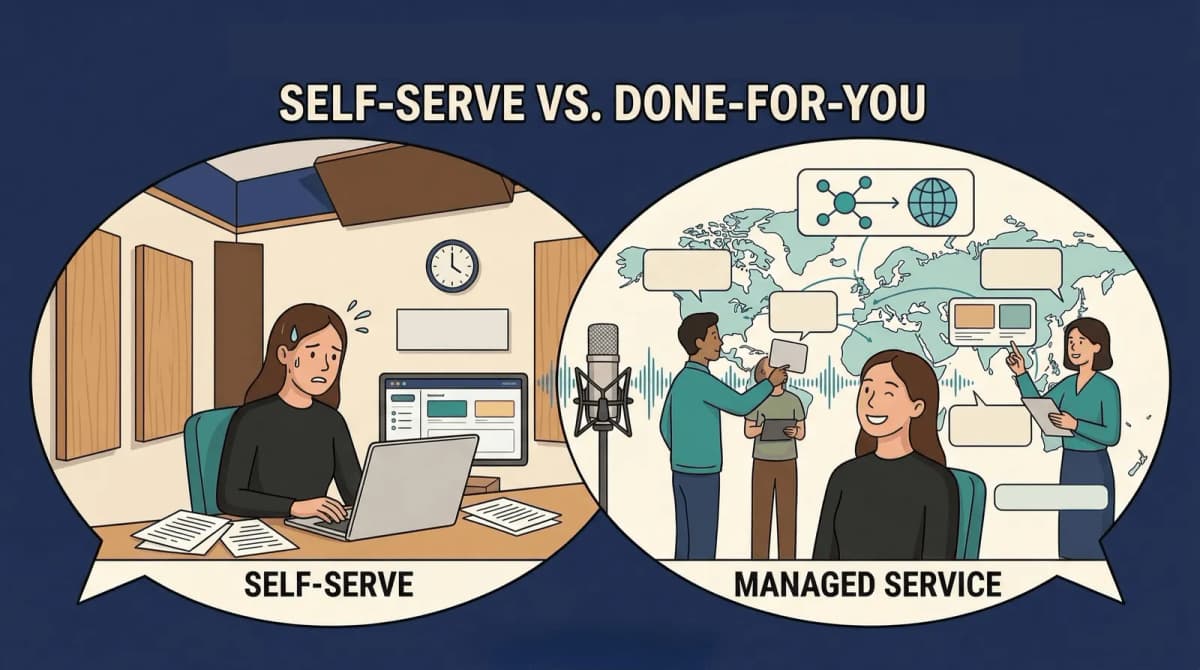
January 6, 2026
HeyGen Alternative for Creators
How managed localization compares to self-serve translation tools.
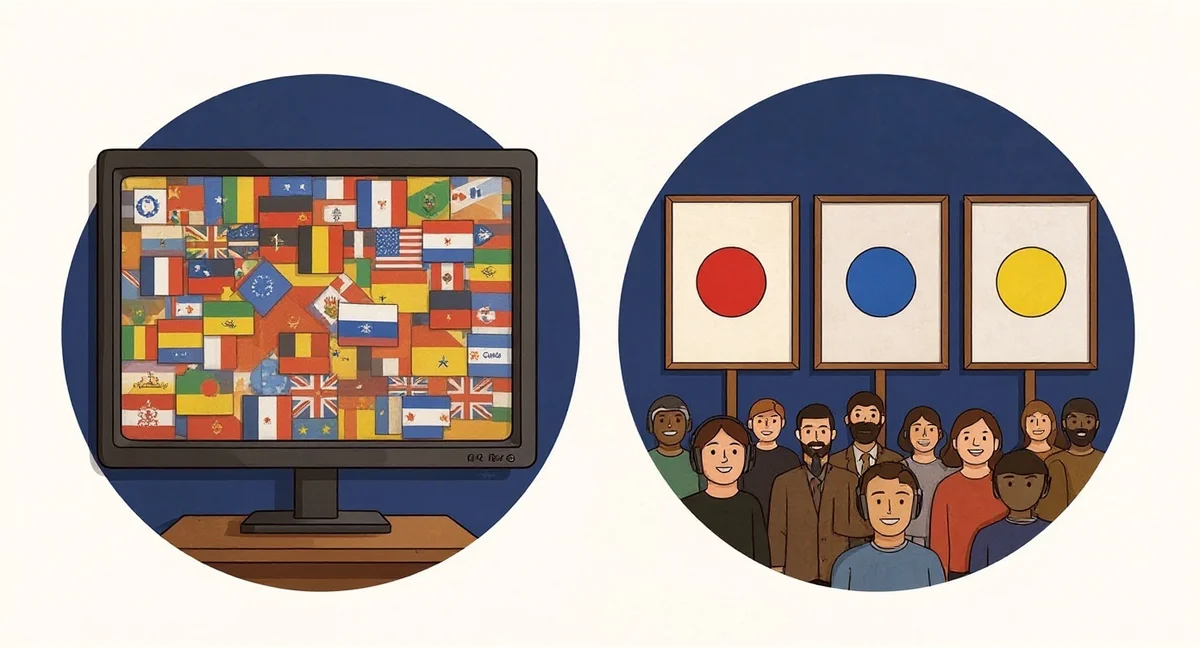
March 28, 2026
Separate Channels vs Multi-Language Audio
The case for dedicated language channels vs multi-language audio on one channel.