Glovio Blog
YouTube Auto-Dubbing: What Creators Need to Know Before Going Global
YouTube just rolled out auto-dubbing to every creator. 27 languages. Free. Sounds like the global growth problem is solved, right? Not quite. Auto-dubbing is a distribution feature, not a growth strategy. Understanding the difference will save your channel from the same mistakes that cost other creators months of lost momentum.
What YouTube Auto-Dubbing Actually Does
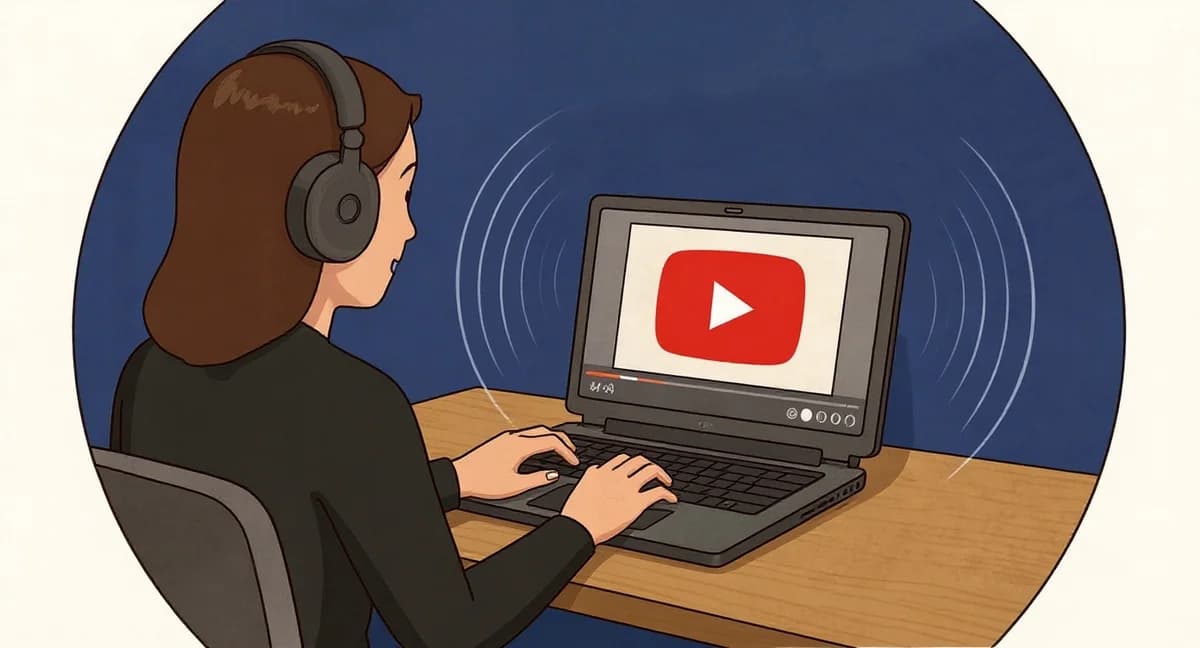
YouTube's auto-dubbing takes your existing video and generates an AI voice track in another language. Viewers in supported countries hear the dubbed version by default. The feature launched for all creators in early 2026 and supports 27 languages.
Here's what happens behind the scenes. YouTube transcribes your audio, translates the text, and generates a synthetic voice that plays over your original video. The viewer can switch between the original and dubbed tracks.
This sounds useful. And for basic distribution, it's fine. Your content becomes technically accessible to non-English speakers without you lifting a finger.
But accessible and effective are two different things.
Where Auto-Dubbing Falls Short
The problems show up in four layers. Each one chips away at viewer experience and your channel metrics.
Layer 1: The voice doesn't sound like you. Auto-dubbing generates a generic AI voice. If your content relies on personality, energy, or emotional delivery, the dubbed version loses what makes viewers come back. For educational or talking-head creators, voice is half the brand.
Layer 2: It only translates audio. Your on-screen text stays in English. Your captions stay in English. Your thumbnail text stays in English. A viewer hearing Hindi but reading English gets a disjointed experience. Retention drops because the viewer has to work harder to follow along.
Layer 3: It uses formal language, not native dialect. Auto-dubbing translates into textbook Hindi, not Hinglish. Textbook Portuguese, not Brazilian Portuguese. This is a huge problem. Creators who use Hinglish see dramatically higher engagement in India than those using formal Hindi. One of our Hindi channels hit 37,000+ reach in just 8 weeks using Hinglish. Formal Hindi wouldn't have done that.
Layer 4: Everything publishes on your main channel. This is the one most creators miss. Auto-dubbed content lives on your existing channel. That means your English-speaking audience might see dubbed content in their feed. Your algorithm signals get muddied. Your CPM can drop because you're mixing high-CPM English viewers with lower-CPM markets. And if engagement dips on the dubbed versions, it drags down your overall channel performance.
The net effect: auto-dubbing gives you surface-level reach but can actively damage the metrics that drive your revenue.
The Hidden Cost of "Free"
Free features have a price. With auto-dubbing, you pay in ways that don't show up on an invoice.
CPM dilution. When your channel starts serving viewers in lower-CPM markets, your blended CPM drops. A creator averaging $8 CPM in the US might see that fall to $5 or $6 as Hindi and Spanish viewers enter the mix. That's real money lost on every video.
Algorithm confusion. YouTube's algorithm optimizes for audience retention and engagement. When dubbed content underperforms (and it usually does, because of the four layers above), the algorithm gets conflicting signals about who your audience is and what they want. This can reduce recommendations for your English content too.
Brand erosion. Your audience chose you for a reason. A robotic AI voice speaking formal textbook language doesn't represent your brand. Viewers in other markets form their first impression of you through that dubbed version. If it feels off, they aren't coming back.
None of these costs show up in a dashboard labeled "auto-dubbing damage." They show up as slowly declining metrics that are hard to diagnose.
When Auto-Dubbing Is Fine (And When It Isn't)
Auto-dubbing works for a narrow set of use cases.
It's fine when your content isn't personality-driven. Tutorials with minimal talking-head footage. Screen recordings with voiceover. Content where the information matters more than the delivery.
It's fine when you don't monetize through brand deals. If your revenue is 100% AdSense and you're comfortable with CPM dilution, the extra views might net out positive.
It's fine when you want basic accessibility. Making your content available in other languages, even imperfectly, is better than nothing for pure reach goals.
But auto-dubbing isn't enough when your voice and personality are your brand. When you sell courses, memberships, or do brand deals. When your international audience is already 20% or more of your watch time. When you want to build real communities in other languages, not just add translated audio tracks.
For most monetized creators with 100K+ subscribers, auto-dubbing isn't enough. The revenue you lose from CPM dilution and algorithm confusion often outweighs the revenue from extra dubbed views.
How Creators Actually Grow Globally
The creators who successfully build international audiences do four things differently.
First, they use separate channels. A dedicated Hindi channel. A dedicated Portuguese channel. Each channel has its own algorithm, its own audience, its own CPM. Your main English channel stays clean. We helped one creator build language channels from zero that have grown to 3.2 million views and 2,600 followers, with 99% non-follower reach. All organic. None of that touched their main channel.
Second, they localize the full viewer experience. Not just audio. Captions, on-screen text, thumbnail text, hooks, and descriptions. Every layer the viewer touches gets adapted. A viewer in Brazil should feel like the channel was made for them.
Third, they match the local dialect. Hinglish for India. Brazilian Portuguese for Brazil. Mexican Spanish for Latin America. Generic translations feel robotic. Dialect-matched content feels native. That's the difference between reach and resonance.
Fourth, they don't translate everything. They start with their top 10 to 15 evergreen performers. The videos that already proved they work. Why guess which content will resonate in a new market when your analytics already tell you what works? You translate what already works, not your entire back catalog.
This is what full-stack localization looks like. It's the opposite of auto-dubbing's "flip a switch" approach. And it's why the results are dramatically different.
Auto-Dubbing vs Full-Stack Localization: Side by Side
Here's what each approach covers.
Audio translation: Auto-dubbing does this. Full-stack localization does this with voice cloning or native speakers.
Dialect matching: Auto-dubbing uses generic formal language. Full-stack localization matches the local dialect.
On-screen text: Auto-dubbing leaves it in English. Full-stack localization translates and redesigns it.
Captions and subtitles: Auto-dubbing may generate basic captions. Full-stack localization creates native-language captions synced to the adapted audio.
Thumbnails: Auto-dubbing doesn't touch thumbnails. Full-stack localization adapts thumbnail text and sometimes imagery for the target market.
Hook rewriting: Auto-dubbing translates your hook word for word. Full-stack localization rewrites hooks to land culturally.
Channel separation: Auto-dubbing publishes on your main channel. Full-stack localization uses dedicated language channels that protect your main channel metrics.
The pattern is clear. Auto-dubbing handles one layer. Full-stack localization handles every layer the viewer experiences.
What to Do Next
If you've auto-dubbing turned on, don't panic. It's not going to destroy your channel overnight. But pay attention to your metrics over the next few weeks. Watch for CPM changes, retention dips on dubbed content, and any algorithm shifts in your recommendations.
If you're serious about growing internationally, here's a simple starting point.
Check your analytics. Go to YouTube Studio, then Audience, then Geography. If more than 15 to 20% of your watch time comes from non-English countries, you've proven demand for localized content.
Pick one language. Use your data to choose the highest-potential market. Don't try to launch in five languages at once.
Localize your top performers. Take your 10 to 15 best evergreen videos and localize them properly for that market. Separate channel, full viewer experience, dialect-matched.
Take our free assessment to see which language has the highest potential for your channel.
This is how you turn international curiosity into international revenue without risking your main channel.
FAQ
Should I turn off YouTube auto-dubbing?
Not necessarily. For some creators, the extra reach is worth the tradeoffs. But if you see CPM drops or retention changes, consider turning it off and pursuing a proper localization strategy with separate channels instead.
Can I use auto-dubbing and professional localization at the same time?
Yes. Some creators leave auto-dubbing on for languages they aren't actively localizing. But for your priority languages, a dedicated channel with full-stack localization will outperform auto-dubbed content on your main channel.
How much does professional localization cost compared to free auto-dubbing?
Professional done-for-you localization starts around $100 per month for full-stack service including voice, captions, thumbnails, and channel management. The question is whether the revenue you lose from auto-dubbing's CPM dilution and algorithm confusion costs more than that.
How long does it take to see results from localized channels?
Results vary by niche and language. We've seen channels hit meaningful traction (tens of thousands of views) within 4 to 8 weeks with consistent publishing of localized evergreen content.